
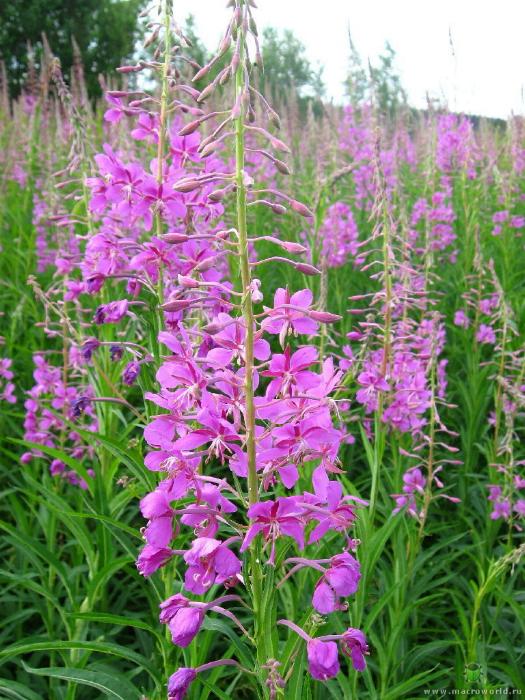

One of the most beloved plants for Russian people has long been ivan tea. The exceptionally beneficial properties of ivan tea have been studied from generation to generation, and recipes for decoctions and infusions from it have been inherited. Tonic “heroic” tea from the plant was drunk in the morning in order to recharge with strength and vigor, they treated headaches and stomach disorders with it. It was believed that a decoction of willow tea could prevent the formation of various kinds of tumors.
Ivan tea is the folk name of a medicinal plant, but it is better known to botanists as narrow-leaved cypress. It is a tall (about 100-150 cm) perennial that grows almost all over Russia. It can mostly be found along roads, in clearings, near rivers and streams. It blooms with red, purple, white, pink flowers, the inflorescences are collected in a brush.
In folk medicine, all parts of a plant are used to treat various diseases – leaves, roots, and flowers. Tinctures, medicinal decoctions and ointments are prepared from fresh or dried willow tea. The plant is highly appreciated by beekeepers, as it is an excellent honeybush: almost every flower contains at least 25 mg of nectar.
Useful properties of ivan tea
Due to its sedative effect on the body, ivan tea is close to valerian officinalis. In addition, decoctions and infusions of cypress have astringent, anti-inflammatory, enveloping, diaphoretic and antibacterial properties. The health-preserving and health-restoring beneficial properties of ivan tea are used to treat the entire body, there is practically no organ whose diseases the cypress could not cope with. They treat headaches, stomach ulcers, diseases of the cardiovascular, genitourinary and nervous systems, gastritis, diarrhea, colitis, dysentery.
Doctors recommend drinking medicinal tea from cypress to improve metabolism, normalize sleep, strengthen immunity, and cleanse the body of toxins. Willow tea contains a lot of antioxidants that remove toxins, and therefore the plant is added to birch brooms, which are then steamed in a bath. Ivan tea is very useful for acute respiratory infections, sore throats, colds: a decoction of herbs is gargled, brewed and taken orally in the form of medicinal tea.
Ivan tea is also useful for cardioneurosis of neurocirculatory dystonia, it is successfully used as a preventive and strengthening agent for people with a predisposition to cardiological diseases. Ivan tea has anti-inflammatory properties, so infusions from it can be successfully used externally to heal wounds, bruises and ulcers. In addition, the plant is also used in cosmetics, adding it as an active ingredient in masks, creams, steam baths.
What does Ivan tea contain?
Nature itself has taken care of the beneficial properties of ivan tea, and has collected in this plant the bulk of the elements of the periodic table. The plant contains: iron, titanium, nickel, copper, manganese, boron, molybdenum, as well as potassium, calcium, sodium, lithium, etc. As well as bioflavonides, pectin, tannins.
The vitamin range of willow tea is represented by B vitamins and ascorbic acid. In terms of vitamin C content, this tea can generally be called a record holder, the amount of ascorbic acid reaches 400 mg per 100 g, which is several times more than in citrus fruits (lemon, orange) and black currant.
The green mass of willow tea also contains protein, which is easily and quickly absorbed by the body and promotes rapid energy saturation. It does not contain caffeine, puric acid, oxalic acid and uric acid, which adversely affect the metabolism.
The effect of ivan tea on the body
Ivan tea raises the tone and gives strength, it treats headaches, migraines, it perfectly calms the nerves, relieves tension, normalizes sleep. Moreover, it is a very mild remedy that is not addictive. Ivan tea is also taken to relieve the symptoms of epileptic diseases.
According to the results of research at the Research Institute of Neurology, doctors have concluded that ivan tea is quite effective in the treatment of mental disorders, neuroses, and post-traumatic disorders.
This drink is used to normalize the condition after severe stress, to minimize the pathological manifestations of anxiety and depressive disorders.
The beneficial properties of ivan tea are so powerful that it is used in the treatment of diseases of the gastrointestinal tract: gastritis, peptic ulcer diseases, colitis, enterocolitis, flatulence, tea normalizes the gastric mucosa, normalizes metabolism and intestinal motility. Tea also has a beneficial effect on the oral cavity, is an excellent prevention of periodontal disease and caries, normalizes the condition of the oral mucosa.
Possessing unsurpassed anti-inflammatory properties, ivan tea is used to treat inflammation in the organs of all body systems: respiratory (bronchopulmonary diseases, acute respiratory viral infections), genitourinary (in the treatment of male diseases – prostate adenoma and prostatitis, ivan tea simply has no competitors, it also enhances potency in men).
A drink from the plant will be useful for anemia. Vitamin C and a large amount of minerals contained in tea contribute to the overall strengthening of the body, tea significantly increases immunity and resistance to pathogens of various diseases. In case of respiratory diseases, ivan tea normalizes temperature, relieves fever, chills.
Also an antioxidant?
Ivan tea is also a good antioxidant, protects against free radicals, particles that destroy cells in the body. The cleansing properties of this plant are also high, it removes slags, toxins, radionuclides, and heavy metal compounds from the body.
A drink made from willow tea is extremely useful for normalizing the condition after alcohol intoxication, it is used even with delirium tremens, while tea helps to reduce alcohol consumption in the future.
Ivan tea is very useful for pregnant and lactating women, it is allowed to be consumed even by infants, because its beneficial properties have no side effects.
External use of tea: purulent wounds are washed with its decoction. For skin diseases, they are treated with lotions and napkins soaked in tea infusion.
Ivan tea in folk medicine is used to treat cancer. This is not surprising: after all, there are no such large amounts of trace elements in any tea, and its benefits are one of the most powerful and tangible.
Young sprouts can be added to various salads, and the roots, dried and ground, can be added to flour, which makes baked goods taste good.
Contraindications of ivan tea
Speaking of the benefits, we must not forget that there are contraindications to ivan tea, which, fortunately, have not been identified at all. Due to the content of a sufficient amount of caffeine in the green mass of the plant, sick people are not advised to use it. In addition, the contraindications of ivan tea relate to pregnant women and young children, before taking drugs from this plant for their treatment, it is necessary to consult a doctor.
THREE WAYS OF FERMENTATION OF IVAN TEA
If a child tries an unripe fruit (banana, pineapple, persimmon or quince) for the first time, then he is unlikely to agree to the offer to try it again. Even if this fruit will now be the ripest and most beautiful.
The same goes for Kopor tea. In order not to be disappointed in this drink, be sure to try to make it yourself, observing all the subtleties of manual technology of harvesting, fermentation, drying and storage. Only then will you be able to compare the true taste and aroma of Kopor tea with the options offered by firms and companies. For the latter, the high price of the product very often does not match its quality.
Ivan tea (cypress, Kopor tea) is a very tasty, beautiful and the healthiest tea on the whole globe!
In terms of its unique chemical composition, Ivan tea is not inferior to seaweed, and in terms of nutritional value and healing power, it far surpasses it.
In Russia, it was believed that Kopor tea could prevent or cure 90% of all known diseases of that time. The remaining 10% were treated with other plants, honey, tar, mushrooms and roots. The constant intake of Kopor tea is the prevention of benign and malignant formations, prostatitis; an effective remedy for problems with the genitourinary system. In addition, this tea is used to improve blood composition and reduce intoxication of the body; relieve food and alcohol poisoning; restore strength in case of exhaustion. Kopor tea also scars ulcers of the duodenum and stomach, increases immunity to various respiratory viral infections, strengthens hair roots, normalizes blood pressure, eliminates headaches and prevents early aging of a person. Many of the healing effects of Ivan tea are similar to baking soda. And this is not accidental. After all, cypress mainly grows on the ash of peat and forest fires, which is the same alkali as baking soda.
Kopor tea, drunk in the evening before going to bed, can slow down the pulse rate, reduce blood pressure and lower body temperature. Such a nocturnal “suspended animation” gives a chance to increase or prolong the active phase of the body by at least a quarter of its average duration, which you will agree is not so little…
This was guessed at the beginning of the 20th century by the physician Pyotr Alexandrovich Badmaev (Zhamsaran), who devoted most of his scientific works to uncovering the mystery of the healing power of Ivan tea. The last time Badmaev became a father was at the age of 100. He lived 110 years in total, and he could have lived more… But the Petrograd prison did not allow him to do this.
Kopor tea was exported from Russia to Europe in huge quantities. But just dried Willow tea herb is not Kopor tea. Kopor tea must be fermented before drying, i.e. subjected to natural fermentation for 24 to 48 hours. The fermentation time and the temperature at which it is carried out affect the color, taste and aroma of the final product. Tea can be made green, yellow or even black. According to its taste qualities, black Kopor tea is beyond competition!
There are several fermentation methods. I know of six of them. And all six work perfectly! Let’s take a closer look at the three simplest ones, taking into account all the nuances…
- The easy way.
Collect the leaves and upper flowers (without seeds) of the Willow tea herb. They should be harvested after 10 a.m., when the morning dew dries. In extreme heat, the collection of raw materials is carried out in the late afternoon. Otherwise, the leaves will “burn” in the basket. You need to collect it very carefully so as not to put a forest bug in the basket. Even one insect can ruin all our work. No wonder the Russian proverb says – the bug is small, but it stinks!
Dry the collected leaves and flowers slightly in the shade, knead them carefully with your hands, rolling them in your palms, and fill a 3-liter jar with them as tightly as possible. Cover with a damp cloth and place in a dark place at room temperature for 36 hours. Then remove the fermented mass, loosen it and dry it at a temperature of about 95-110 degrees Celsius in an electric or gas oven. If desired, you can form a flat tiled tea. For example, round, like the Chinese “Puer”.
In some places in Russia, tea was made in the form of a large layer, the size of a baking tray for a Russian oven. This layer somewhat resembled modern chipboard, only black and brown in color.. At the bazaar, such tea was sold by weight, chopping off the right piece from the seam with an axe!
In the modern home conditions of a city apartment, it is problematic to make and dry a huge tile. But it is quite realistic to make a small one, with a dry weight of 250-300 grams. It can be formed in any plastic container from raw Willow grass, a tea with a low degree of fermentation under pressure. Fermentation will be completed completely during molding. You will have to dry the tile in an electric oven, with upper and lower heating (preferably with infrared radiators), with the convection mode turned on. The drying time will depend on the initial moisture content of the tile (which depends on the time of day, the date of the last precipitation and the month of collection of raw materials) and its third size – thickness. To save electricity, it is better to dry several tiles at the same time.
When drying, it is necessary to regularly stir the drying tea or turn over the flat tile. At the same time, it will acquire the color we need. It can vary from light brown to almost black. The drying time of loose tea is determined “by eye”, and round tea is determined by weighing dry tiles. The ratio of the raw mass to the finished dry tea should be 5:1. It is better to store Kopor tea under a lid, in a glass or plastic container, in the absence of sunlight.
The shelf life is at least three years.
- The forgotten way.
Spread the leaves of Ivan tea on a damp linen canvas or tablecloth with a layer of up to 3 cm. roll into a “twist”, like a large roll, as tightly as possible.
For a small amount of grass, it is better to take a smaller canvas, while also remembering to lightly moisten it with clean water from a household spray bottle. Otherwise, it will absorb some of the valuable juice from the leaves.
We tighten the twist with a rope or a rubber tourniquet and carefully bend it with our hands, bending and unbending it in different directions for 20-30 minutes, thereby destroying the cellular structure (vacuoles) of the leaves of Willow tea. It’s more convenient to do it together. Then we leave the twist alone and allow the initial fermentation for 2-3 hours. Periodically check the temperature of the twist by touch. With a noticeable heating (more than 37 degrees), we finish the initial fermentation.
It turns out to be such a crumpled herb with a pleasant smell of fermented pear compote.
Young apical (May) shoots are so tender that the destruction of their cellular structure occurs during the laying in the container. At the same time, a characteristic crunch is heard when pressing the green mass with your hand.
We fold it, tamping it very tightly into plastic buckets or glass jars under the lid for complete fermentation. In order not to confuse them later, we will write the date of the bookmark on the lid. We finish fermentation after 36 – 40 hours. Its duration can be increased if you put the raw materials in a cool place. This will give the tea a more subtle taste. For late tea (July – August blanks), we make an additional stage of fermentation.
To do this, we will thoroughly wash the raw materials from the bucket with our hands until the juice appears.
An important point!
If you do not have the time or energy to perform this operation, then the mass can be passed through the screw of a meat grinder with the knives removed or a special electric grinder. But in this case, the taste and medicinal properties of tea will be weaker…
Then leave it alone in a small pile, covering it with a damp cloth, for 6 to 8 hours at room temperature. As soon as the tea acquires the properties of soft rubber by touch, it needs to be dried quickly.
To do this, we put the future tea on a baking sheet and dry it in the oven at a temperature of ~ 100 degrees Celsius. At the end of drying, the temperature can be slightly increased. This will allow you to “calcinate” the tea leaves in the likeness of coffee beans. Not only the color and aroma of the tea will improve, but also its taste.
Do not forget to mix more often! We keep the oven door slightly open. To prevent the tea from roasting, it is advisable to put two red clay bricks or ceramic tiles on the bottom of the oven.
They will stabilize the temperature and emit infrared rays of the desired spectrum, similar to a Russian stove. The healing qualities of Kopor tea depend on this.
After 1.5 – 2 hours, Kopor tea is ready! With a little experience, 300-400 grams of dry product can be dried in a day. Drying of tea on a dryer made of a heating film for saunas gives good results.
It is better to take the film with an operating temperature of 80 degrees Celsius. You need to put calico on top of the film. The entire structure can be made in a rectangular wooden box that fits perfectly on the windowsill.
Here is a variant of a multi-tiered film dryer with forced convection for Kopor tea of any kind. The power consumption is only 500 watts, the maximum load of the raw mass is 8 kg. The drying time is 12-16 hours.
But the ideal of drying is a Russian oven. All tea drying parameters are “automatically” maintained in it. Such a giant oven, 11 meters high, can dry several pounds of fermented Willow tea.
It is better to store Kopor tea under a lid, in a dark place.
Tile tea should be wrapped, appropriately, in thick paper. The shelf life of loose tea is at least three years, and the shelf life of tiled tea is decades!
The taste and aroma of tea only improve over time. Additional dry pre-fermentation occurs.
- Fermentation under pressure in its own juice.
The collected raw materials (tops of shoots and leaves of cypress) are divided approximately equally into two piles. From the first, using a powerful compressed juicer, we get juice. The percentage of juice yield is small, even if you use the most modern juicer “Angel”. Put the remaining half of the leaves in a ceramic pan and pour the boiling water over it. We put a wooden circle (or a slightly smaller lid) with a load on top. Its weight should be at least 20 kg (and preferably a two-pound weight in a plastic bag, so that there is no direct contact with the “brine”). After three days, the fermentation will end and the tea must be dried at a temperature of + 90 degrees Celsius. These are the plates of Kopor tea that will turn out
Welding.
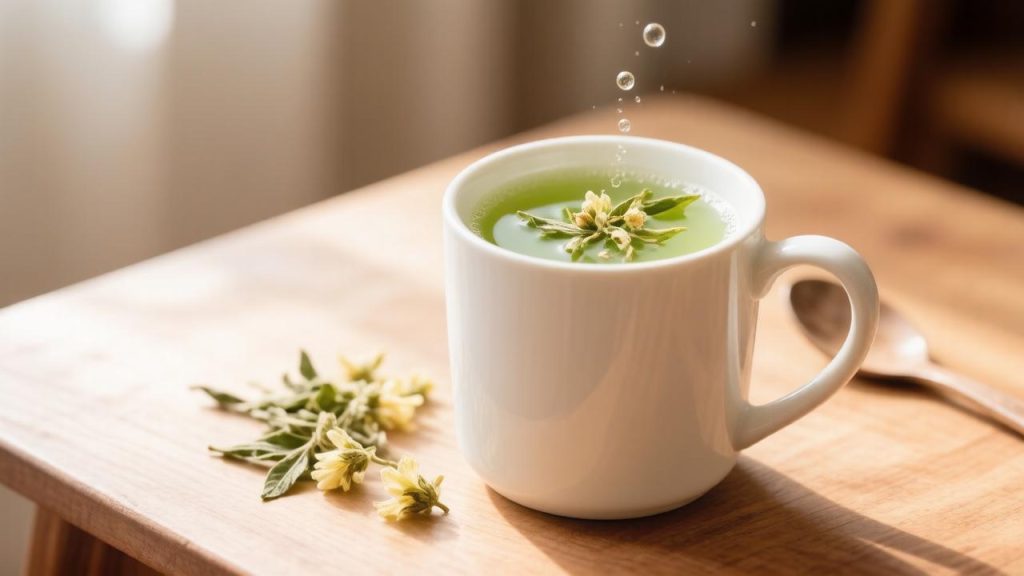
5 grams of dry Kopor tea tea is enough for one person for a day, of course, if they don’t run a marathon. This is about 4-5 cups of a rich drink. Re-welding is allowed. But its taste qualities will no longer be so pronounced.
Taking into account the possible treats of the “koporka” guests, 2 kg of dry tea is enough for one person for a year.
Most of all, the taste and aroma of Kopor tea depends on the quality of the water and the brewing itself.
It would be deceit to claim that tap water can be made “tasty” with the help of filters. Anyone who has ever drunk tea with lake or meltwater from the glaciers of the mountains will understand me.
The dry brew should be uniform in color and size. Its smell is also important, similar to the pear-apple compote of dried fruits, hot drying. A tea brew that emits a faint smell of spoiled hay will not make good tea.
Tableware (kettle) can be of various types: glass, porcelain, rhinestone or brass samovar. In the last brew, it is lowered into a container or linen bag (at the rate of: 2 tablespoons per 1 liter of volume). Made of modern materials – metal ceramics. Pour boiling water over it.
It is important to maintain the brewing time. It takes at least 40 minutes. For an amateur, it can be increased to 4-6 hours. With a longer process, the drink begins to oxidize and loses its color and taste. They drink it hot or cold. When heating the cooled tea, do not allow even the slightest boiling of the drink. The subtle fragrance will disappear immediately.
Kopor tea is usually drunk without dilution with boiling water.
The benefits of Kopor tea.
The presence of iron, copper, and manganese in the plant allows it to be considered a means capable of improving the hematopoiesis process, enhancing the protective functions of the body, and having a pronounced calming effect. Ivan tea gently normalizes intestinal activity. Due to the rich content of tannins, mucus and vitamin C, Ivan tea has good anti-inflammatory and enveloping properties in gastric ulcer, gastritis, colitis. And also with enterocolitis, dysentery diarrhea, flatulence and anemia. Drinking it regularly relieves migraines, helps with insomnia, anemia, delirium tremens, infections, colds and asthma. In general, it boosts the immune system, being the most powerful natural cleanser. In the old days, it was not for nothing that they said about him that he not only heals the body, but also enlightens the mind and lifts the spirit.
Anyone who drinks Kopor tea will never have problems with the prostate gland and sexual impotence. The name of the plant speaks for itself. And one of the remarkable advantages of Ivan tea is that it alkalizes the blood and thereby restores strength in case of various kinds of exhaustion and after serious illnesses.