


Tamil Nadu. This state is located in the very south of India and has characteristic differences from other states, not only in that the Tamil language is mainly used here, and generally accepted state languages are practically ignored, but also by the peculiar character of the local population, its own distinctive culture and even philosophy.
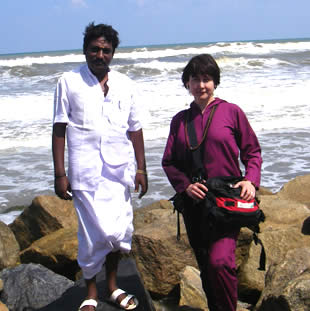
For example, religion here is more free from edifying prejudices, since it was here that Tantric Hinduism once flourished. It is this religious trend that allows you to freely perceive the world around you as something important for spiritual advancement and not give up real life. And the spiritual path is considered to be the ability to transform a not entirely joyful reality into something completely absolute and beautiful, changing one’s worldview and improving one’s own mind. Also, it is here that all kinds of Yoga Ashrams flourish, and it is here that various systems are preserved and operate that are accessible to anyone and are undoubtedly beneficial in their practical application. As for cultural peculiarities, the Bharat Natyam temple dances, which have their origins in ancient times, and the music of Tamil Nadu are famous not only in India, but also far beyond its borders.
Fashion doesn’t lag behind either. For example, it can be noted that along with traditional Indian clothes, this state has its own unique style. For example, women’s attire looks more like a dancing sari. These clothes are more vibrant, beautiful and comfortable for the body. And beautiful young Indian women, usually very dark-skinned here, freely fill the streets of cities, covering their hair with white blossoming flowers, covering their slender bodies with transparent capes and sweeping the streets with luxurious wide skirts. And men, unlike in other states of India, freely and without hesitation bare their bodies to the waist, covering the rest of the lunga, which is just a piece of two-meter-long fabric, elegantly wrapped around the waist.
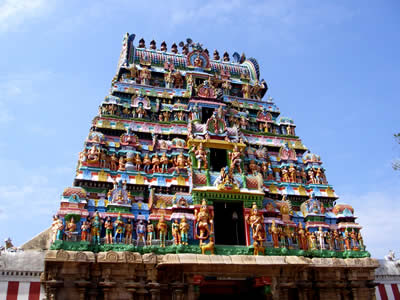
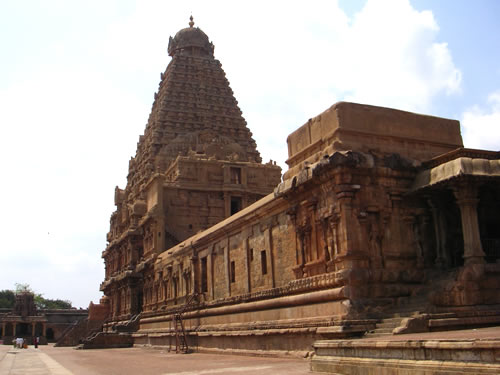
So, after traveling a long way with several transfers, Igor Livandovsky and I arrived early in the morning in Thanjavur, the ancient capital of all those dynasties that ruled in the south in the 10th and 14th centuries. The Chola rulers went down in history as great builders: after each victory they built a temple. The number of these temples gradually increased to 70. The whole city is surrounded by them, and the most remarkable thing is that these temples are built according to all the rules of the Jyotish astrology that still flourishes here, and each one is directly related to one or another deity of the Indian pantheon or to one or another planet that influences the fate of people and the country as a whole. Therefore, the state of Tamil Nadu, and in particular Thanjavur, represent a completely unique philosophical system according to which the locals have been living unanimously for many generations without any doubt about its functionality. This system is as necessary for them as following family traditions and Vedic rules. At first glance, this unconditional acceptance seems surprising, but after visiting temples where special rituals and pujas are held non-stop every day, after living in this state for a longer time, you realize that this unconditional acceptance is not a tribute to established traditions and is not the ignorance of an uneducated population. On the contrary, this system lives and thrives due to its effectiveness and the fact that people receive undoubted benefits for their lives from its application. I looked at the faces of the parishioners and was amazed at the faith with which they worship their Gods, with what care they follow the instructions of local astrologers in conducting rituals. Here, any problem, any obstacle, any controversial issue is solved with the help of this Jyotish astrology and nothing else.
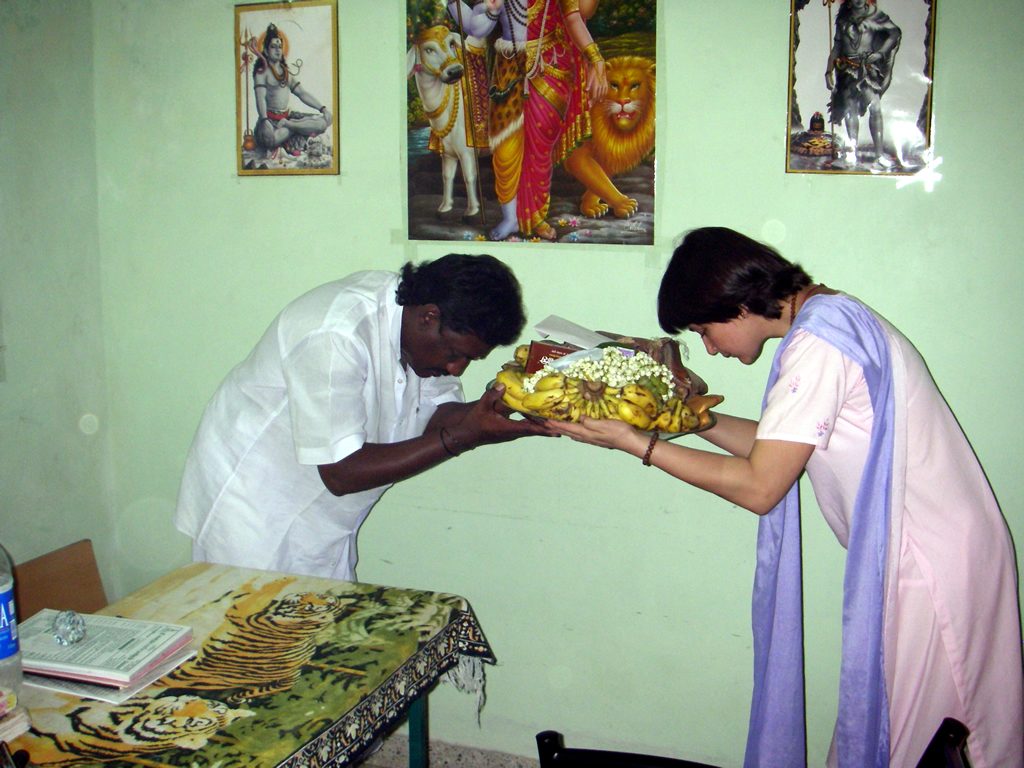
In general, this is the second time we have come here for this very purpose. But this time the task was more difficult. We had to not only find palm scrolls for our friends, but also carry out special corrective rituals that the astrologer assigned to Nadi for those whose horoscopes had already been made.Upaya (this Sanskrit word means “method, remedy”) is a section of Jyotish responsible for using agamaya kriyamana-karma to mitigate unfavorable combinations of astrological factors. Formally not belonging to the number of branches or sections of Jyotish, this area is actually its most important and useful section. Jyotish can identify the good and bad times that everyone will have to go through in different years of their life, but only upaya can enhance all the good and mitigate the bad. The existence of upaya confirms that Jyotish is by no means fatalistic: after all, if absolutely everything was predetermined, how could there be saving means? There are a huge number of upaya methods, and we will list some of them.: These are mantras – sacred syllables, hymns, or prayers addressed to the deity from the heart; wearing certain precious stones and amulets, observing fasts and other vows; performing rituals of worshipping fire, planets, and certain deities; and finally, and most importantly, some forms of charity. And it was the latter that was the most interesting and remarkable when they were implemented.
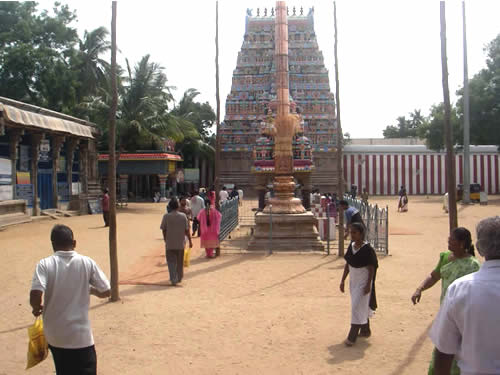
Driving in a stuffy and low-slung car that looked like an antediluvian Soviet Victory, several dozen kilometers every day along roads crowded with carts and animals jumping under the wheels, we did all the necessary rituals in the surrounding temples, appointed by Nadia astrologer. When the rituals were all done, we finally started implementing a charity project for children from poor families. Our friends Oleg Zakharov, Sergey Livandovsky and Svetlana Artemyeva provided funds for this project in advance. Nadi astrologer Mr. Kartikeya, after reading them and our horoscopes, calculated in advance how much minimum funds are required to correct our bad karma accumulated in the past, and we began to fulfill this upaya with some skepticism. School uniforms and school supplies were purchased, which had to be given to a certain number of children, and lunch was prepared for 210 people, whom we had to feed.We arrived at the school.
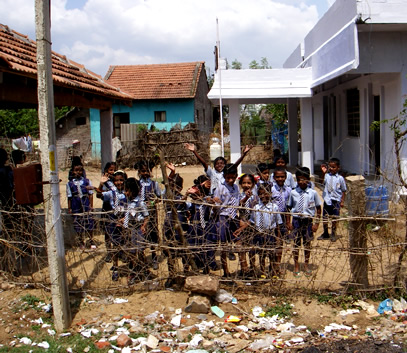
I still don’t even know what to call this place, but this so-called “school” didn’t even have a single desk. Frowning, frowning children sat on the cold concrete floor in some open verandas, completely devoid of any furniture, and even the blackboard was painted directly on the wall with black oil paint.Of course, India has never been considered a particularly successful country, but such a hopeless childhood is not seen every day in our time. It cost us a lot of effort to make the children smile. While handing out food to them, I tried to coo something, and Igor did the same, joking and winking at the little ones, and they still smiled. It was a real victory. It was only here that I truly realized that what we were doing made perfect sense. Children need our care, right now, when their character is being formed, right now, when they are exploring this world, it is very important that they enter it with a positive consciousness and a kind heart. And this is the key to the future of our planet.
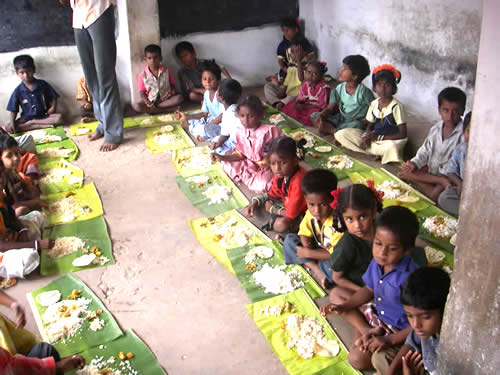
If we don’t give them love, then how will they learn to love?Yes, I watched the frowning faces of the children light up with pure and kind smiles and thought with a pang about our Russian children. Here in India, there are practically no orphans, and even in the poorest family, as a rule, parents love their children. Because in India, it is believed that a child is a messenger from God. But think about how unhappy our children must be, overflowing with orphanages, shelters, and train stations with doorways? Children running away from their own home, from their own parents, from the people closest to them in the world? This is the future of our country, the future of our children and our old age. Is it really possible to be happy surrounded by unhappy people?And then the following thought occurred to me: shouldn’t we organize such an upaya here in Russia, so that a person can really understand the interdependence of his own bad karma, and therefore his own well-being from the well-being of defenseless beings living next to him, namely children?And sometimes the thought comes to mind that we are not even helping them, but they are helping us. And this is not only because we can correct our bad deeds accumulated in the past through this charity, but also because it is actually the source of our happiness.
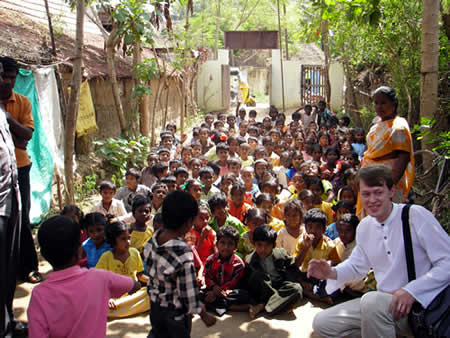
When a person extends a helping hand to another being, for some reason he begins to feel joy and contentment. And strangely enough, this joy is greater than from obtaining primitive pleasures for one’s own satisfaction. In order to understand this, you just need to try. We were really proud of our friends who sponsored this event, the people who helped us do it in India, and the children who accepted our help. So I stood there and smiled my whole face off, stunned and completely satisfied, with a ladle in my hands and stained pants, and I wanted to do such things over and over again, and even if I didn’t have enough money, then our smiles and attention to such children could also be invaluable capital, capable of bringing great benefits in the future.
Elena Kshanty